Gen Z social media marketing in India is not one job. It is four or five jobs that happen to share a phone. Instagram for discovery and status, YouTube Shorts for the long tail of search, Snapchat for the friends who actually matter, Sharechat and Moj for the tens of millions who never switched to English. A brand that treats all of that as one “social” line in a media plan is paying metro prices for a tier-2 audience and wondering why nothing lands.
We run Gen Z marketing across 250+ campaigns and 200+ cities, and the platform mix is the first thing we argue about with a new client. Here is how we think about each app, and how they fit together.
Why Gen Z social media marketing in India needs a platform-by-platform plan
Roughly 375 million Indians were born between 1997 and 2012. The 18 to 26 year olds inside that number are in colleges, hostels, PGs and first jobs across 200+ cities, and their phones do not look like a Bandra media planner’s phone. A student in Indore has Instagram, Sharechat, Snapchat, YouTube and three WhatsApp groups that matter more than any of them.
Each app does a different job in their day. Instagram is where they perform. Shorts is where they search without typing. Snapchat is where they are honest. Vernacular apps are where the humour is in their own language. Plan for that, or the content you make for one app will die on the other four.
Instagram: the shop window, not the shop
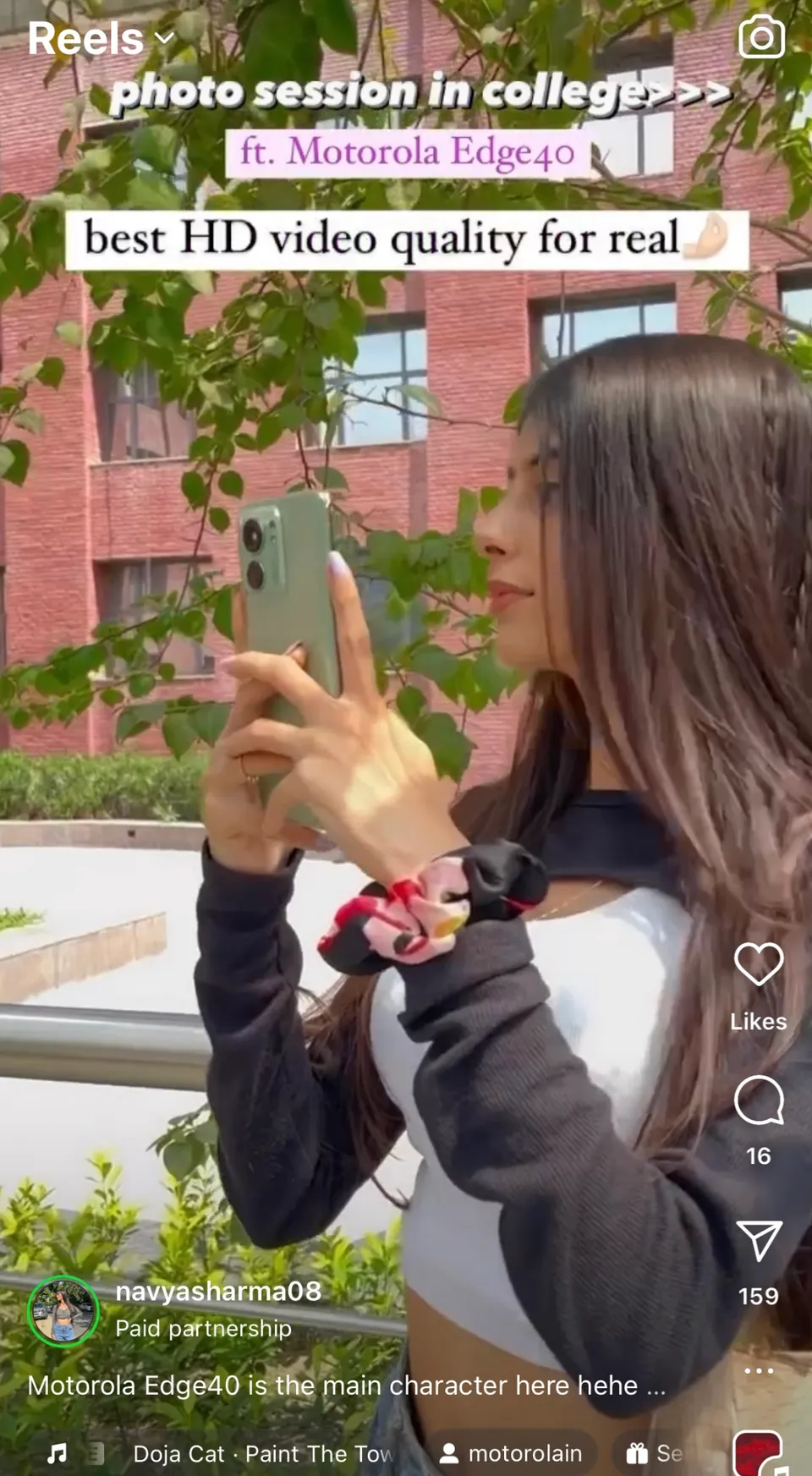
Instagram is still the centre of gravity, and reels are the format. Static posts are for the grid, which nobody scrolls. Stories are for people already following you, which is a small number for most brands. Reels are the only place a brand can reach a Gen Z audience that has not opted in.
What works: creators who look like the buyer, shot on a phone, with a hook in the first second and a Hinglish punchline. What does not: the 30-second TVC cropped to 9:16 with the logo at the end. We brief our 50K+ creators on the first, and we refuse to run the second as organic because it burns the account’s reach for a month.
The commercial move is to treat Instagram as a shop window that points somewhere. A reel that ends with a quick-commerce search term, a referral code or a signup action does work. A reel that ends with “link in bio” does not, because nobody goes to the bio. Our Gen Z social media marketing service is built around that one rule.
YouTube Shorts: the search engine that looks like a feed
Shorts has two things Instagram does not. It is indexed by Google, and it sits next to the long-form videos the same creator made. A Shorts review of a budget phone or a skincare serum shows up in search for months. An Instagram reel is gone in three days.
That changes what you ask creators to make. On Shorts, brief for the question a buyer would type: “best earphones under 2000”, “is this hostel-safe”, “how to use”. On Instagram, brief for the scroll-stop. Same creator, two edits, two jobs. Brands in consumer apps and gadgets get the most out of this, because question-shaped content is exactly what a first-time buyer is looking for.
Snapchat: the private layer everyone forgets
Snapchat in India is bigger among 16 to 24 year olds than most media plans admit, and it is where Gen Z talks to actual friends rather than performing for followers. Streaks, Snap Map, private stories. There is no viral loop in the Instagram sense. There is a trusted loop, which is better for some brands.
Brands do well here with two things: AR lenses that are genuinely fun (not a logo on a forehead), and campus-level creator stories from people the audience already knows. A campus marketing programme with 100K+ ambassadors is also a Snapchat distribution network, because an ambassador’s private story reaches their hostel floor. No ad buy gets you in there.
Sharechat, Moj and the vernacular tier
Outside the metros, a large part of Gen Z India lives on apps in their own language. Sharechat and Moj carry enormous youth audiences in Hindi, Tamil, Telugu, Bengali, Marathi and more, and the humour, the audio and the formats are their own. A reel that killed in Mumbai, translated, reads like a dubbed film.
The rule is simple: do not translate, re-cast. Find creators in Lucknow, Jaipur, Bhubaneswar and Guwahati who already post in the language, brief them in that language, and let them write the joke. Our creator network is tagged by city and language for exactly this reason, and our creator UGC work for FMCG and D2C brands outside the top eight cities is mostly vernacular now.
- Instagram reels: discovery and scroll-stop. Creator-led, Hinglish, ends in an action you can track.
- YouTube Shorts: search-shaped content that lives for months. Question-first briefs.
- Snapchat: trusted-loop distribution through friends and campus ambassadors. Lenses and private stories.
- Sharechat and Moj: vernacular, re-cast not translated, local creators only.
- WhatsApp: not a platform you post on, but the one where the group decides. Make content worth forwarding.
Gen Z does not have a favourite app. They have a favourite app for each job, and your content has to know which job it is doing.
How to put the mix together without five separate agencies
The mistake is to run each platform as a silo with its own creative, its own vendor and its own report. The content should flow. A campus activation gets shot as creator reels. The best reel gets cut into a Shorts version with the search question in the title. The ambassador who shot it posts the behind-the-scenes to their Snapchat story. The vernacular version gets re-cast by a local creator for Sharechat. One brief, five outputs, one dashboard.
Measurement has to follow the same logic. Reach on Instagram, search impressions on Shorts, story views and swipe-ups on Snapchat, shares on Sharechat, and one action metric (code redemptions, installs, quick-commerce lift) across all of them. We have written up the dashboard in how to measure Gen Z marketing campaigns.
If this sounds like a lot of moving parts, it is. That is what a Gen Z marketing agency with the creators, the campuses and the regional network already in place is for. The platform mix is not a media buy. It is a casting and distribution problem, and it is won on the ground.
FAQ
Which social media platform works best for Gen Z marketing in India?
Instagram reels for discovery, YouTube Shorts for search-shaped content, Snapchat for trusted peer distribution and Sharechat or Moj outside the metros; our Gen Z social media marketing plans use all of them for different jobs.
Should Gen Z content be in English or Hinglish?
Brief creators in the language they already post in, by region, because a translated English reel reads like a dubbed film in Lucknow or Indore.
How do you measure Gen Z social media marketing?
Platform-native reach metrics plus one shared action metric such as code redemptions or installs, on a single dashboard; see how we measure Gen Z campaigns.